

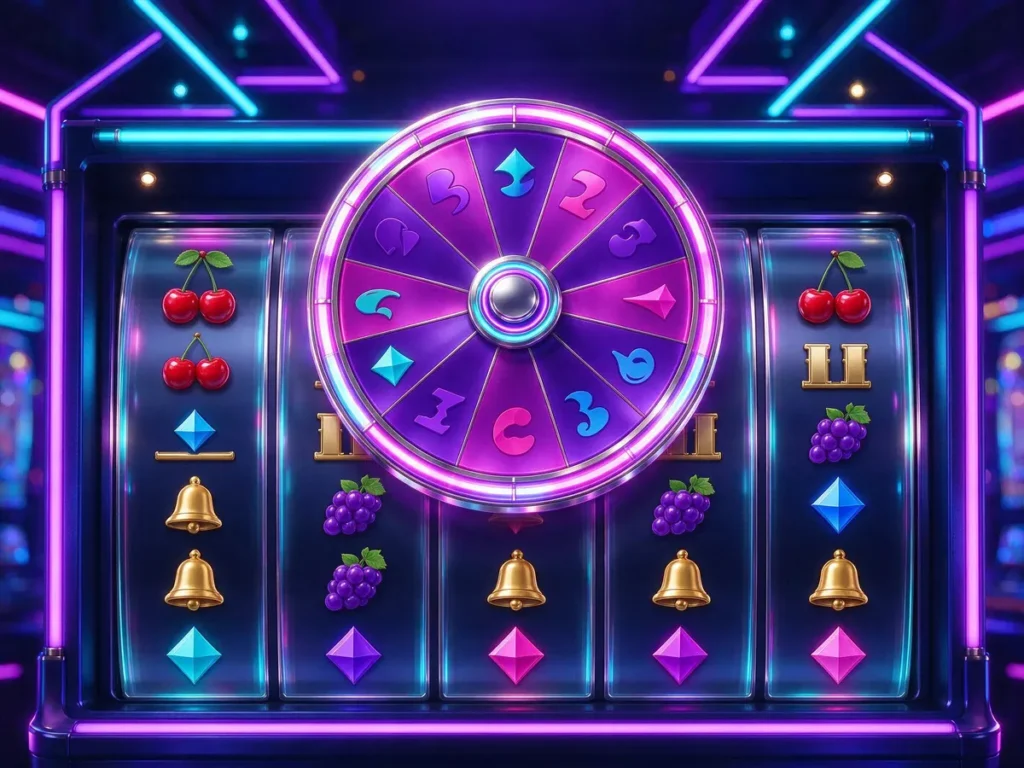
A bonus wheel slot mechanic is a feature round in which a game spins a segmented wheel and pays whatever the pointer lands on. That definition is accurate, and also slightly misleading, because the wheel does not decide anything. The outcome is picked first by the random number generator, and the wheel is the animation that delivers the news.
The mechanic is worth unpacking now because Playson has just put an enhanced version of it back on the market. 3 Gems of Vegas: Super Wheel brings back the studio’s Super Wheel feature, first rolled out in June 2026 across a selection of its titles, with a change to where the wheel can appear. It’s a tidy case study in how these features are built, marketed and misread.
What a bonus wheel is, and what it isn’t
A bonus wheel is a software feature in which a slot awards a prize from a set of predefined segments, usually after a specific trigger symbol lands. Segments can hold cash multipliers, free spins, feature upgrades or jackpots. It is not a physical wheel, and the spin you watch has no mechanical influence on the result.
That distinction matters more than it sounds. A real wheel has momentum, friction and a croupier, and those are all things players instinctively believe can be read. A digital wheel has none of them. The graphic could be replaced with a card flip or a treasure chest and the maths would be untouched.
Inside Playson’s Super Wheel in 3 Gems of Vegas
3 Gems of Vegas: Super Wheel is a Vegas-themed slot built around three Bonus Features, a 1,000x Grand Jackpot and the returning Super Wheel. Classic casino icons fill the reels, and blue, pink and green diamonds are collected into enlarged diamonds above the grid, which can randomly trigger the Bonus Game.
How the Super Wheel is triggered
The Super Wheel is triggered by landing a Wheel Symbol. In the enhanced version it can be accessed in both the Main Game and the Bonus Game, which is the part Playson has changed. What the wheel can award depends on where it fires.
| Where the Wheel Symbol lands | What the Super Wheel can award |
|---|---|
| Main Game | One of four in-game jackpots, or entry to the Bonus Game with a Collect, Multi or Charge Feature |
| Bonus Game | A jackpot win, an additional Bonus Feature, or an enhancement of the feature already in play |
What the enhancement actually changed
The headline change is access, not generosity. Playson’s earlier Super Wheel implementations put the mechanic in one place; here it works across base and bonus play, which means a wheel hit during a bonus round can stack a second feature on top of the one running or upgrade it. Playson frames that as strengthened win potential. Exact segment counts, individual jackpot values below the 1,000x Grand and the specific behaviour of the Collect, Multi and Charge features sit in the game’s paytable rather than the announcement, and anyone writing about or playing the game should read them there rather than assume.
How bonus wheel outcomes are actually determined
Every bonus wheel outcome comes from a random number generator drawing against weighted segment probabilities, not from an equal chance per segment. A wheel with eight segments does not give each one a one-in-eight shot. The 1,000x jackpot slice and the small cash slice can occupy identical arc widths on screen and carry wildly different hit rates.
This is the single biggest gap between what a wheel looks like and what it is. Visual weight is a design decision; mathematical weight lives in a configuration file. The two are not required to match, and in practice they rarely do, because a jackpot segment sized honestly in proportion to its probability would be a sliver you couldn’t see.
The counterweight is certification. Licensed games have their RNG and prize distributions tested by independent laboratories, with GLI and eCOGRA among the best-known names, and regulators require that testing before a game goes live in their market. That process does not make a wheel generous. It confirms the wheel behaves as the submitted maths says it does, which is a narrower and more useful promise.
The wheel variants you’ll actually meet
- Prize wheel: segments hold fixed cash amounts tied to your stake, the simplest version and usually the flattest.
- Multiplier wheel: segments apply a multiplier to a win or a stake, which is where the big advertised numbers normally live.
- Jackpot wheel: one or more segments award a fixed or progressive prize pool, as in the four in-game jackpots sitting on Playson’s Super Wheel.
- Nested wheel, sometimes sold as a wheel of wheels: landing certain segments sends you to a second, better wheel instead of paying directly.
- Pick-and-spin hybrid: a pick round determines which wheel or how many spins you get, adding a decision that usually changes nothing about expected value.
Playson’s version is a hybrid of the jackpot and upgrade types, since a single wheel result can deliver a jackpot, open a bonus round, or improve a bonus round in progress. For context on how pooled prizes actually accumulate and pay, our explainer on how progressive jackpot payouts build and trigger covers the arithmetic.
Why studios keep building them
Bonus wheels persist because they solve a problem on both sides of the screen. For players, a wheel creates a few seconds of suspense with a visible set of possible outcomes, which reads as transparency and feels like agency even when there is no decision to make. For studios, it is a known-good retention mechanic that travels: Playson calls the Super Wheel player-proven and has carried it across selected titles since June, which is exactly what a modular feature is for.
Reskinning a working mechanic into a new theme is cheaper and lower-risk than inventing one. That’s not a criticism. It does mean you should read “returning mechanic” as “familiar”, not “improved”, unless the announcement specifies what changed, as this one does.
What a wheel does, and doesn’t do, to your odds
A bonus wheel does not sit on top of a slot’s RTP, it is part of it. The published return figure already includes everything the wheel can pay, so a flashier wheel is not a better return. What a wheel does change is volatility: moving a chunk of the game’s total return into rare, large feature outcomes makes base play thinner and sessions swingier. A 1,000x Grand Jackpot has to be paid for by the spins that pay nothing.
Two things I would not do. I would not increase my stake to chase a Wheel Symbol, because the trigger is random and independent on every spin, and a longer dry run means nothing about the next one. And I would not treat the top segment as a realistic target, because it exists mainly to set the ceiling of the paytable. If you want a wheel feature to hit often, you want a low-volatility game, which by definition will not have a headline number worth printing.
Set a deposit or loss limit before you start, treat the spend as the price of entertainment rather than a route to income, and use the operator’s session reminders if you lose track of time. If any of that feels inconvenient, that’s the signal to stop for the day.
The number nobody publishes
Playson’s enhancement is a genuine change to a real feature, and the game is clear about what the Super Wheel can award. What it isn’t clear about, and what no studio currently discloses, is how often each segment lands. Certification confirms the weights are what the developer declared. It does not tell you what they are. Until segment probabilities sit next to RTP in the paytable, reading a wheel means reading the shape of the paytable around it and accepting that the pretty part of the feature is the part you can see least into.
If you want another worked example of a modular bonus mechanic being upgraded rather than replaced, our breakdown of Blueprint Gaming’s expanding Collect symbol in Kong Even More Money covers a similar design move from a different studio.