

A joint venture, not a purchase
Did Gaming and Leisure Properties go out and buy industrial real estate in Illinois? No. The first non-gaming deal in the casino REIT’s history is a joint venture with Prologis (NYSE: PLD) covering land GLPI has owned since 2013, the former Hollywood Casino Joliet site, which Prologis intends to redevelop into a distribution and warehouse hub, according to casino.org.
That distinction matters more than it sounds. GLPI (NASDAQ: GLPI) is not writing a cheque for a new asset class; it is finding a second life for a parcel its casino tenant walked away from. Read it as “casino landlord buys warehouses” and you will overestimate both the capital at risk and the speed of the pivot. Read it as “casino landlord stops treating a dead casino site as a dead asset” and you are closer.
What GLPI is putting into the Prologis joint venture
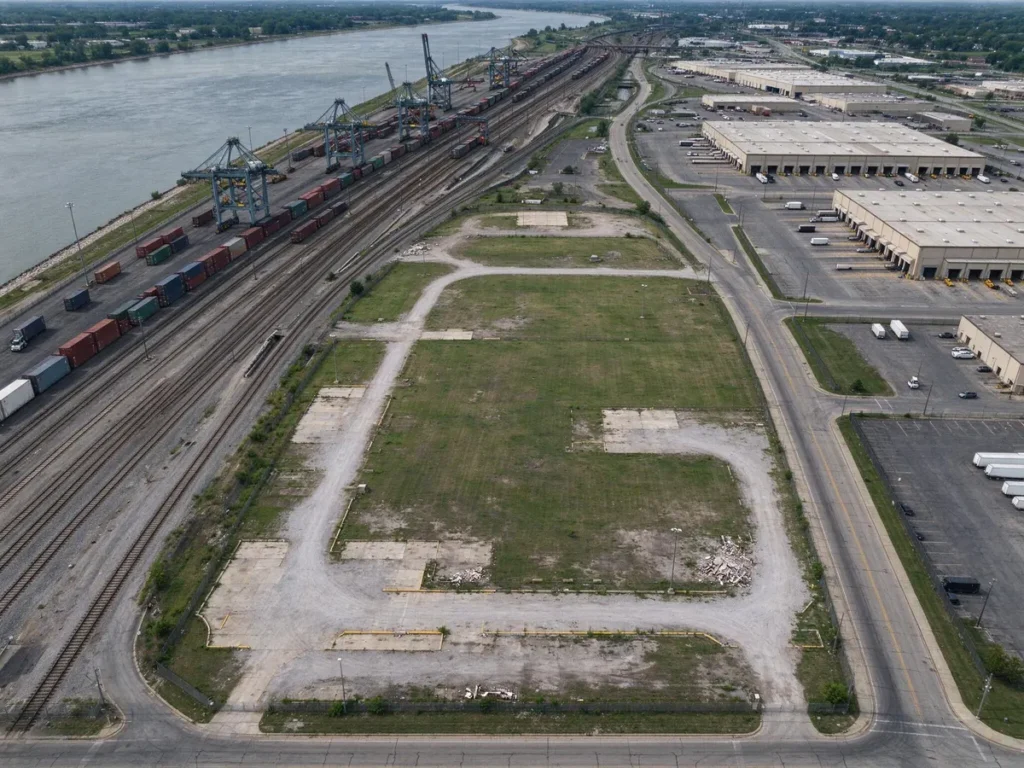
GLPI is contributing a 262-acre parcel at 777 Hollywood Boulevard in Joliet, Illinois, to the joint venture in three phases, with Prologis serving as managing member and developer of the site, per the company statement reported by casino.org. Financial terms were not disclosed. Prologis will develop the site over five years and holds options over the development of phases two and three.
| Deal element | Detail (per casino.org) |
|---|---|
| Asset | 262-acre parcel, 777 Hollywood Boulevard, Joliet, Illinois |
| Structure | Joint venture; GLPI contributes land in three phases |
| Partner role | Prologis is managing member and developer |
| Timeline | Development over five years |
| Optionality | Prologis holds options over phases two and three |
| Financial terms | Not disclosed |
Three phases plus partner options is a phased, conditional commitment rather than a single transaction. Prologis can advance phase one and decide later on the rest. Until GLPI discloses how capital, rent and returns are split, nobody outside the deal can size what this contributes to earnings. Treat any confident number you see as an estimate.
Why this counts as a first for Gaming and Leisure Properties
GLPI’s entire business until now has been owning casino real estate and leasing it back to operators on long-term triple-net terms, which means the tenant covers taxes, insurance and maintenance while the landlord collects rent. Casino.org reports GLPI leases 71 gaming venues across 21 states, with Penn Entertainment and Bally’s together accounting for 50 of them.
So the Prologis deal breaks two patterns at once: it is GLPI’s first joint venture and its first transaction outside gaming. Everything else on the balance sheet is a casino with a rent cheque attached. Industrial development is a different discipline, which is presumably why GLPI handed the developer role to the largest industrial real estate company in the world rather than attempting it alone.
It is worth being precise about what has and has not changed. GLPI is still a gaming landlord with heavy tenant concentration. One 262-acre JV does not dilute a portfolio where two operators sit behind roughly 70% of the properties. Casino.org notes GLPI is not currently having trouble collecting rent from its tenants, but that investors in listed gaming REITs are increasingly prioritising deal and tenant diversification. The Joliet venture answers the mood, not the arithmetic.
Why the old Joliet site came free
The site became available because Penn Entertainment moved Hollywood Casino Joliet to a new location in August 2025, investing $185 million in the new venue, whose real estate GLPI also owns, per casino.org. The same report says Wall Street has judged the move a success. GLPI acquired the original Joliet site’s real estate when it was spun off from Penn in 2013, so it has been the landlord on both the old and the new address.
That is the quietly unusual part. A relocation normally leaves one of the two parties holding a stranded asset. Here the landlord financed the replacement and kept the vacated land, which gave it the luxury of choosing how to recycle the old parcel. Illinois operators have been shifting away from legacy water-based venues to land-based buildings for years, and each of those moves leaves a comparable orphaned site behind.
Casino.org also reports that Cushman & Wakefield, which listed the former casino site, said GLPI’s preference was a long-term ground lease or a joint venture rather than an outright sale. The listing described the site as already annexed, with most parcels carrying I-2 industrial zoning, positioned near the BNSF and Union Pacific intermodals and close to I-80 and I-55. That combination, zoning in place and rail plus interstate access, is why a logistics developer wanted it.
What it signals about gaming REIT diversification
The strategic logic is straightforward: a landlord whose rent comes almost entirely from regional casino operators is exposed to one sector’s cycle, one regulatory regime and a short list of tenants. Non-gaming exposure spreads that, and casino.org frames the Prologis venture as GLPI taking a page from rival VICI Properties, which has pushed beyond casino floors already. Readers tracking the comparison may find context in VICI Properties’ first share buyback and what it signals for gaming REIT investors.
My own reading is that this is asset management dressed as strategy, and that is fine. Contributing a vacated parcel to a developer who knows warehouses is a sensible use of land that would otherwise sit idle generating nothing. It is not a declaration that GLPI intends to compete for industrial assets on the open market, and I would not price the stock as though it were. The test of a genuine diversification programme is capital deliberately allocated outside gaming, not a legacy parcel finding a tenant.
What usually happens to a shuttered casino property
Most vacated casino buildings get demolished, because they are purpose-built shells with vast column-free floorplates, minimal natural light, and infrastructure designed around surveillance, cash handling and gaming floors. Casino.org notes it is likely Prologis will need to demolish the building the casino previously occupied. The common paths for the land underneath:
- Industrial and logistics conversion, where highway or rail access and permissive zoning already exist, as in Joliet.
- Mixed-use redevelopment, typically on urban or waterfront parcels with residential demand.
- Retail or entertainment reuse, which occasionally keeps the structure but rarely at the original scale.
- Extended vacancy, the default when zoning, remediation or access make redevelopment uneconomic.
Former casino site redevelopment usually turns on location rather than nostalgia. The Joliet parcel moved quickly because it sat beside intermodal yards during a period of strong warehouse demand. A comparable site without rail access can wait years.
What would confirm a pattern
Watch for a second non-gaming transaction that involves fresh capital rather than existing land, and watch how GLPI discloses the Joliet venture’s economics in its filings, which will show whether this is a yield-generating platform or a tidy disposal. The company has other parcels tied to relocated or closed casinos; if those start appearing in similar structures, the diversification case strengthens. Until then, the honest position is that GLPI has done one non-gaming deal, with undisclosed terms, on land it never had to buy.