

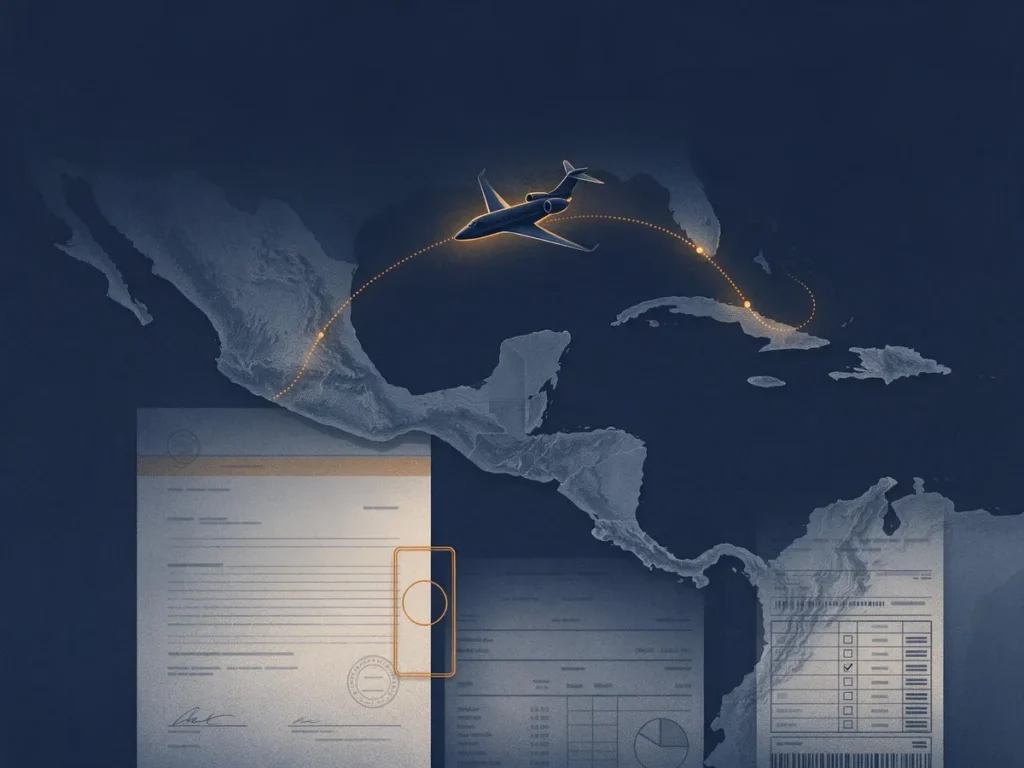
A travel ban that ended at Puerto Iguazú
On Tuesday 27 October, a car carrying Brazilian senator Flávio Bolsonaro, his wife and their two daughters crossed overland into Argentina, according to Argentine immigration authorities. The family boarded a private jet at Puerto Iguazú, stopped in Guayaquil, Ecuador, and landed at Miami-Opa Locka Executive Airport the next morning. The day before the drive, Brazil’s Supreme Federal Court had ordered Bolsonaro to surrender his passports and barred him from leaving the country. He left anyway, and in doing so he turned a domestic case into a textbook study of what an international gambling investigation can and cannot do once a person is on the other side of a border.
That gap is the whole story. Financial records travel. Court orders do not.
What Brazilian investigators say they are examining
Federal police are investigating whether Bolsonaro secretly held an interest in BestBet, an online betting site previously licensed by Loterj, the Rio de Janeiro state lottery, and whether his relationship with lawyer Willer Tomaz involved undisclosed business ties and financial irregularities. Justice Alexandre de Moraes issued the travel ban and passport order on Monday 26 October, a day after Bolsonaro’s election defeat to incumbent Luiz Inácio Lula da Silva, and also prohibited him from contacting Tomaz after federal police raised concerns he might flee.
Tomaz is not an incidental figure. Brazil’s Finance Ministry identified him last year as the country’s biggest online gambler, and court documents put his cumulative wagers at online casino and sportsbook Blaze.com at R$6.6 billion, about $1.3 billion, across 2025 and 2026.
The ownership question runs through a chain of companies rather than a single document. An investigation published by the Brazilian magazine piauí identified links between BestBet’s owner, Rede Loto, and two Portuguese holding companies associated with Tomaz. Documents described by piauí and Folha de S.Paulo show Bolsonaro registered as a “master user” on a Santander bank account belonging to Alcazar Holdings, one of those companies. Investigators are weighing whether that access, together with other connections, points to hidden ownership of the betting business.
Both men deny wrongdoing. Bolsonaro says he holds no joint account with Tomaz and has no illicit business relationship with him. Tomaz disputes the reporting, says his companies operate lawfully, and says the money he gambled on Blaze.com came from legitimate sources and was declared to tax authorities. A separate investigation concerns alleged financial irregularities tied to a film about his father, Jair Bolsonaro, which he also denies.
R$6.6 billion in wagers is not R$6.6 billion in money
Cumulative turnover and deposited funds are different numbers, and conflating them is the most common error in coverage of big-bettor cases. R$6.6 billion is the total amount staked across thousands or millions of rounds, not the amount of cash that entered the account.
The arithmetic is simple once you see it. Online casino games typically return something in the region of 94% to 97% of total stakes over the long run, so a player who keeps re-staking winnings loses only a few percent of each round’s wager on average. Money cycles. A bankroll can produce turnover many multiples of its own size before it is exhausted, which is exactly why regulated operators report turnover to finance ministries and why anti money laundering analysts pay attention to it: high recycling is also an effective way to obscure where funds originally came from.
What nobody has published, in the reporting available, is the net figure. How much was deposited, how much was withdrawn, and what the account’s actual cash position looked like are the numbers that would separate an unusually large gambling habit from a laundering mechanism, and they are not in the public record. Estimating them would be guesswork dressed as analysis. If your own play is generating turnover you could not explain to yourself, incidentally, deposit limits and self-exclusion tools exist at every licensed operator and are worth using before anyone else asks the question.
Why these cases fragment across jurisdictions
Three structural features made this an international gambling investigation rather than a local one, and none of them is unique to Brazil.
- The licence came from a state body. BestBet was licensed by Loterj, a state lottery in Rio de Janeiro, while the betting market it served was national. Sub-national licensing of an internet business creates immediate mismatch between the regulator’s reach and the operator’s customer base.
- The ownership sits offshore. The companies linking Tomaz to BestBet’s owner are registered in Portugal, which means Brazilian investigators need foreign corporate registries, foreign banks and formal cooperation requests to see who actually controls what.
- The banking trail crosses systems. A “master user” credential on a Santander account is the kind of evidence that only surfaces when a financial institution hands records over, and that handover depends on where the bank sits and what the local law requires.
US readers have seen a domestic version of the same fragmentation: betting law routinely splits along jurisdictional seams, as in the case where Utah brought criminal charges against Kalshi’s founders over sports event contracts that a federal regulator had already treated as lawful. Different level of government, same underlying problem.
Where a Brazilian court order loses force
Once Bolsonaro landed in Florida, the Brazilian orders governing his movement stopped being enforceable against him, and the investigation continued without him. A senior US State Department official said he and his family would be admitted to the United States, and President Donald Trump expressed support for their arrival. Allies quoted by the Brazilian outlet Metrópoles say he is expected to seek political asylum.
This is the point where the evidence genuinely runs out, and it is worth being blunt about it. No charge has been reported against Bolsonaro in the betting matter. No US agency has been reported to be investigating him. Whether Brazil will formally request extradition, how the Supreme Federal Court will respond to the breach of its own order, and how an asylum claim would be assessed are all open. An asylum application resting on political persecution and an extradition request resting on financial crime can coexist in the same file for years, and anyone offering you a timeline is inventing one.
The trade-off regulators have not solved
The uncomfortable part of this case is that the transparency which exposed it came from regulation, and the weakness it exploited came from regulation too. Brazil’s licensing and reporting regime is the reason a finance ministry could name the country’s largest online bettor and the reason a turnover figure exists in court documents at all. In a purely offshore grey market, that number would not exist; nobody would know. Regulation produced the paper trail.
It also produced a licensing patchwork in which a state lottery could authorise a national online operator whose ultimate owners sat behind holding companies in another continent. Tighten federal control and you push operators and players toward offshore sites with no reporting duty at all. Keep licensing decentralised and competitive and you keep the gaps that make beneficial ownership hard to pin down. There is no version of this with a clean answer, which is why every maturing market keeps relitigating it.
For anyone depositing money, the practical takeaway is narrower and more useful than the politics: find out which authority actually licensed the site holding your balance, and whether that authority has the power to do anything if the operator’s accounts are frozen mid-investigation. A licence badge in a website footer tells you a body issued a permission. It does not tell you how far that body’s writ runs, and this case is a reminder that the distance can be measured in continents.