

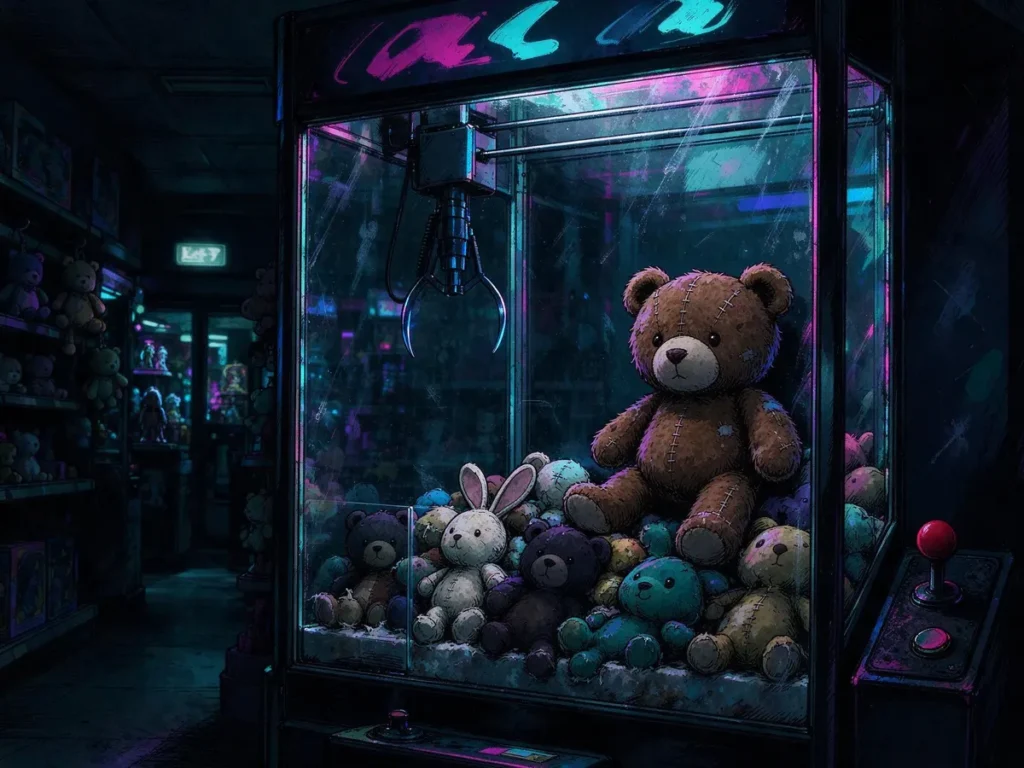
The 20,000x headline and the number sitting underneath it
The Stitchers Get Stitches slot, released by Stakelogic on 29 October 2026, advertises a maximum multiplier of 20,000x on a 6×4 grid with 4,096 ways to win. The 20,000x is the figure the announcement leads with. The 4,096 is the one that actually describes what you will see on most spins, because 4 symbols on each of 6 reels gives exactly 46 = 4,096 combinations before any of the game’s expansion mechanics fire.
Those two numbers belong to different conversations. One is a ceiling, reached by a vanishingly small slice of outcomes. The other is the structure of the base game. Confusing them is the single most common mistake players make when reading a release note, and this release gives plenty of room for it.
What Stakelogic has confirmed
| Specification | Detail |
|---|---|
| Provider | Stakelogic |
| Release date | 29 October 2026 |
| Grid | 6×4 |
| Ways to win | 4,096 base, expandable via symbol splits |
| Maximum multiplier | 20,000x |
| Base game features | Chainsaw Massacre, Uprising |
| Bonus features | Free Spins with accumulating multipliers, Hold ‘n’ Win |
| Special symbols | Stitches Wild; Chainsaw symbol, listed separately and not itself a wild, which splits other symbols on the reels |
| RTP | 95.98%–96.01% (listed on Stakelogic’s own site) |
| Volatility rating | Not confirmed in available sources |
| Hit frequency | Not confirmed in available sources |
The RTP row is the one that anchors everything else. Stakelogic’s own site lists the game at 95.98% and 96.01%, which puts the house edge at roughly 3.99% to 4.02%, or about ₹4 of every ₹100 wagered retained over the long run. That sits inside the usual slot band of 94% to 97%, so the return is unremarkable in the ordinary sense: average, not generous. Two slightly different figures appearing for the same title usually points to more than one configuration being available to operators, so the panel inside the lobby you actually play in is still worth checking.
The setting: a cursed claw machine and a teddy bear with a grudge
The theme places the whole game inside a cursed claw machine in a toy store, where corrupted plush toys led by an antihero teddy bear called Stitches climb up from the bottom of the pile to overthrow the pristine toys above, stealing value on the way. That climb is not just set dressing. It maps directly onto the Uprising feature, where lower-level toys rise and displace the ones ranked above them, which is how the game produces sudden shifts in symbol value mid-spin.
The tone Stakelogic is aiming at is dark comic rather than outright horror. Chainsaw Massacre is a feature name with a wink in it. That matters for who this lands with: players who bounce off genuinely bleak horror art will probably find this closer to the Gremlins end of the spectrum than the haunted-house end.
Symbol splitting versus fixed ways: which does more work
Symbol splitting is the mechanic that separates this release from a standard 4,096-ways game. The Chainsaw symbol, which Stakelogic lists as its own symbol type rather than as a wild, divides other symbols on the reels into multiple pieces, expanding the grid and creating additional ways to win on the same spin. The Stitches Wild is the separate wild symbol, and multiplier symbols then scale the values that result.
The arithmetic here is worth understanding, because expansion compounds. Ways-to-win games multiply the symbol count on each reel together. If a split takes one reel from 4 positions to 8, the ways count doubles. If splits land on two reels, it quadruples. A single spin can therefore go from 4,096 ways to several multiples of that without any extra stake, which is the same principle that powers variable-ways formats generally. It also means the game’s win distribution will be lumpier than a fixed-ways title at the same RTP: more spins that return nothing, fewer spins that return a lot. Expansion mechanics do not change the long-run return at all. They move it around.
Compare that with a fixed 4,096-ways slot and the trade is clear. Fixed ways give you a steadier, more predictable rhythm. Split-based expansion gives you a base game where an ordinary spin can turn into something much larger, at the cost of a longer tail of dead spins in between. Neither is better value. They are different shapes of the same mathematics.
Two bonus routes, and the one that plausibly carries the ceiling
Stitchers Get Stitches offers two distinct bonus paths: Free Spins, where Stitches appears as a wild on every spin and multipliers accumulate, and Hold ‘n’ Win, which can also be activated. On the information available, the Free Spins round is the far likelier home of a 20,000x outcome.
The reasoning is structural. Accumulating multipliers compound across a round, so a long free spins sequence with repeated splits and a rising multiplier is the only described mechanic that can stack enough on top of a single stake to reach five figures. Hold ‘n’ Win rounds, as a format, generally resolve around locked symbols carrying fixed values, which produces a tighter, more bounded distribution. Stakelogic has not published the value ranges for this game’s Hold ‘n’ Win, so treat that as a reading of the mechanic type rather than a confirmed fact about this title.
Two bonus routes in one game is a reasonable design choice rather than a gimmick: it gives the round-to-round experience some variety and gives the studio two separate levers to tune. It also means the listed ~96% return is an average across two quite different payout shapes. Worth remembering before assuming one bonus feels like the other.
The seasonal read and the mechanical read
There are two honest ways to look at this release, and only one of them survives scrutiny. The seasonal read says a horror-themed toy slot dated 29 October is a Halloween play, timed for the annual October bump in searches for horror themed slots, and that the theme is the product. The mechanical read says the theme is a wrapper on a Payways chassis that Stakelogic already runs, and the only genuinely new thing is how splitting interacts with the Uprising displacement.
The mechanical read is the one to back, with a caveat. The launch date is obviously not a coincidence, and no studio releases a cursed claw machine in late October by accident. But seasonal themes have a short shelf life, and a slot that depends on calendar interest is a slot that disappears in November. What will determine whether this one is still in lobbies next spring is whether split-plus-displacement produces a base game that holds attention without a bonus trigger. That is a mechanics question, not a theme question. The same test applied to Pragmatic Play’s pirate-candy slot Sweet Loot and it applies here.
Against the broader run of stakelogic new slots and toy horror slot game releases from other studios, the differentiator is not the 20,000x. Plenty of recent new slot releases quote ceilings in that range or higher. It is the specific combination of a dark-comic theme with a mechanic that physically rearranges the grid in a way the story justifies.
What is still open
Three things remain unconfirmed, and each of them changes how you would read the game: the volatility rating, the hit frequency, and whether Hold ‘n’ Win has its own trigger condition or sits inside the Free Spins round. The return is known at roughly 96%, so the 20,000x is at least anchored to something. What that anchor does not tell you is how the 96% is distributed, and on a splitting game the distribution is most of the experience. The same return can arrive as frequent small hits or as long droughts punctuated by one large round, and nothing published so far settles which this is.
So the practical position is this. Treat the 20,000x as a design statement about the top of the distribution, not as an outcome worth planning around, and check the game info panel in your own lobby to see which of the two listed return figures your operator runs. Expansion mechanics are entertaining precisely because they are unpredictable, which is also the reason to set a deposit or session limit before the first spin rather than after an interesting one. At about 96%, roughly ₹4 of every ₹100 staked stays with the house over the long run, and no feature in the game changes that.